Thrash Metal – Speed, Aggression, Denim
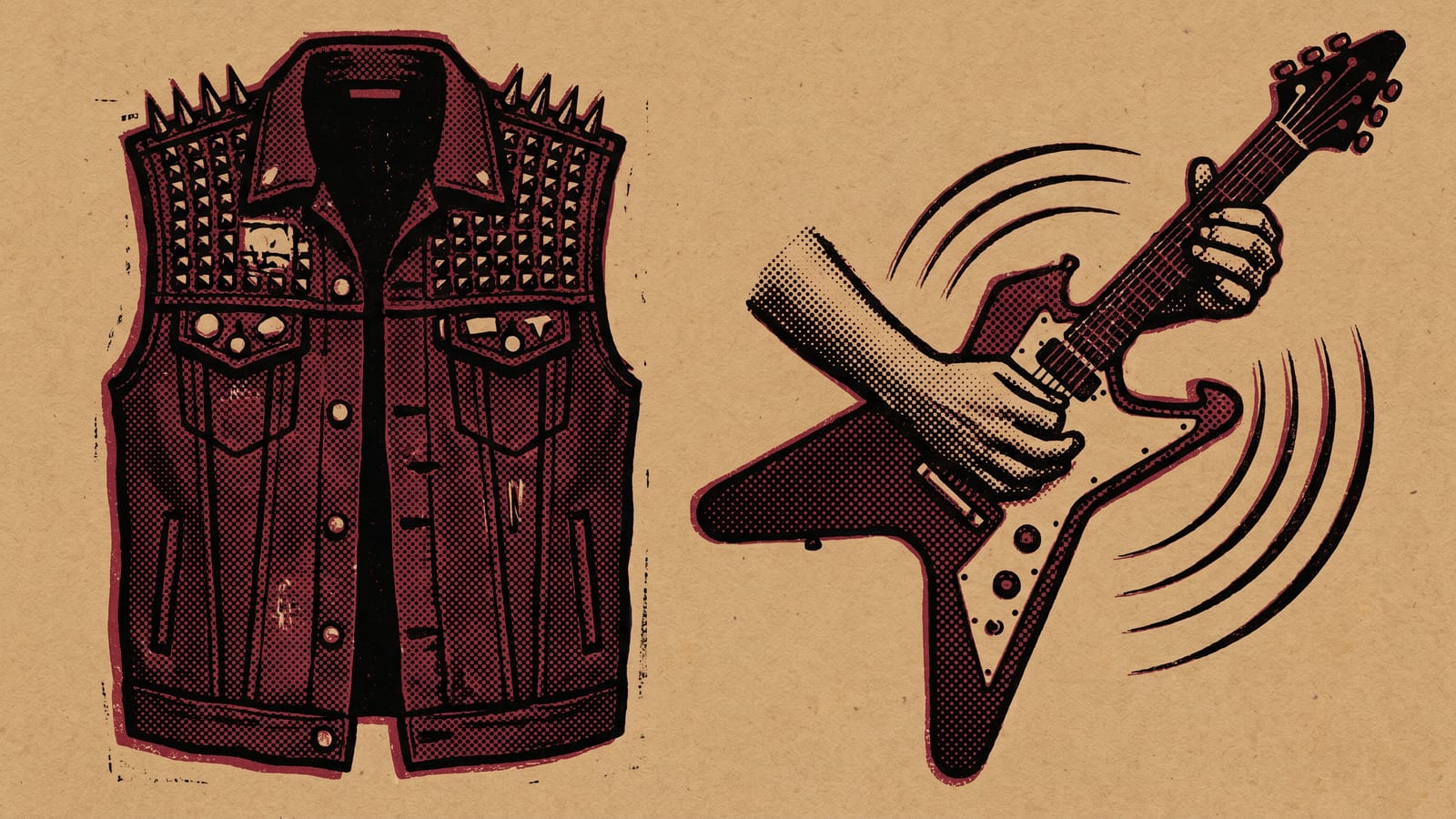
Thrash metal is what happened when the teenagers who grew up on NWOBHM discovered hardcore punk and decided both were too slow. By the early 1980s, a cluster of bands in the San Francisco Bay Area had pushed the tempo past anything heavy metal had attempted before, stripped back the theatrics, and built a scene that looked, sounded, and dressed nothing like the hair metal filling arenas at the same time.
Where it came from
The genre pulled from two very different places at once. The technical side, the twin-guitar harmonies, the precision riffing, the sense that the musicians actually knew what they were doing, came directly from British heavy metal. Bands like Diamond Head and Motorhead were in heavy circulation among the early Bay Area crowd, and the debt to NWOBHM is explicit in the guitar work.
The aggression and the pace came from hardcore and punk. The Bay Area had an active punk scene, and the cross-pollination between metalheads who attended punk shows and punk kids who started picking up metal records produced something genuinely new. Venom, a British band operating at the extreme edge of metal, were also a direct influence on the speed and attitude, if not the technical execution.
The Bay Area scene
Metallica are the most famous band to come out of this milieu, though they actually formed in Los Angeles before relocating to San Francisco in 1983. Their debut, Kill ‘Em All, came out in July 1983 on Megaforce Records and announced the template clearly: fast picking, aggressive vocals, no ballads, no glam. The same year, Slayer released Show No Mercy through Metal Blade Records, and their approach was even more extreme, faster and darker, with Kerry King and Jeff Hanneman developing a guitar style built around velocity and dissonance.
Exodus were the scene’s central local band in the early years. Kirk Hammett, who would join Metallica, came out of Exodus. Their debut Bonded by Blood, recorded in 1984 and released in 1985, remains one of the genre’s defining records and a document of what the Bay Area scene sounded like before it hit the mainstream.
Megadeth formed when Dave Mustaine, fired from Metallica in 1983, set out to build something faster and more technically demanding than what he had left behind. The band brought a harder, more angular edge to the genre and completed what would become the “Big Four” alongside Metallica, Slayer, and Anthrax.
The battle vest
The look that defined thrash metalheads was the battle vest, a denim jacket with the sleeves cut off and the back and front covered in patches. Each patch represented a band, usually screen-printed directly from an album cover or logo, and accumulating them was a slow process tied to record purchases, tape trades, and gigs attended. The result was a wearable catalogue of a person’s listening history.
The battle vest grew out of the same biker and working-class culture that fed into early heavy metal. By the time thrash picked it up, it carried clear rules: denim or leather, sleeves off, patches earned, not bought as a set. The back panel patch, usually the wearer’s favourite band in large format, was the centrepiece. Studs and pins filled the gaps.
The look placed thrash fans visually and socially in opposition to the spandex and hairspray of glam metal, and that contrast was deliberate. Thrash took its cues from the underground, from tape trading and fanzines, and the battle vest signalled membership in that network.
Speed as statement
What made thrash distinctive beyond just being fast was the sense that speed was a political position as much as a musical one. The genre emerged in conscious reaction to commercial metal, to the production gloss and the MTV-friendly packaging of the early 1980s mainstream. Playing faster, louder, and rawer was a way of drawing a line.
That rejection of the mainstream gave thrash a close relationship with punk that never fully dissolved. The scenes overlapped in crowd and attitude, and the metalheads who built the Bay Area scene were not precious about genre boundaries. They went to hardcore shows, they liked punk records, and that showed in the music.
By the mid-1980s the Bay Area template had spread internationally, with scenes developing in New York, Germany, and Brazil. The genre had found its audience, and the battle vest had found its way onto teenage backs across three continents.