Skinhead Hair – The History Behind the Look
The cropped head is the most legible signal in the whole skinhead wardrobe. It costs nothing, it reads instantly, and it says something specific: working class, hard, no pretension. Understanding where it came from makes the style make sense.
Why the crop emerged
The short back and sides that became the skinhead look did not arrive from nowhere. It grew out of practical working-class life in late 1960s Britain. Men in manual trades kept hair short because long hair was a liability around machinery and on building sites. A close crop was also cheap: a number two all over with a pair of Wahl clippers at home, and you never needed a barber.
The timing mattered as well. The late 1960s was the era of the hippie, of long hair as a political statement. The early skinhead took the opposite position, deliberately. A shaved head read as hard, urban, and working class in direct contrast to the middle-class counterculture. It was anti-fashion as much as fashion.
Grades and variations
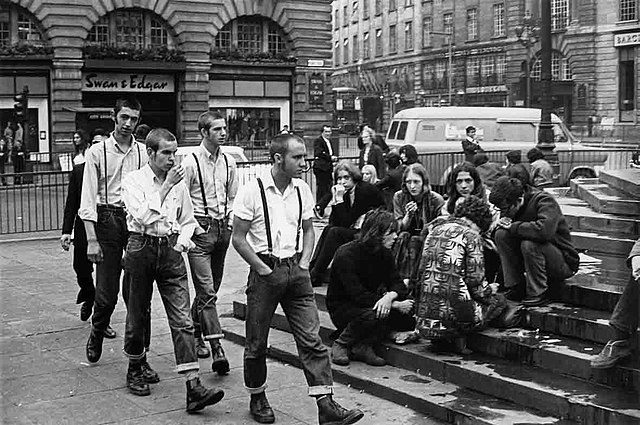
Early skinheads had longer hair than most skins today
The original late-1960s crop was not the near-bald look associated with the scene today. Early skins wore their hair short but not shaved, typically a grade three or four on the clippers. By the revival period of the late 1970s and early 1980s, coinciding with the Oi! music scene and the harder edge of street punk, the grades dropped. A number one became standard, and some skins went down to a zero or shaved entirely.
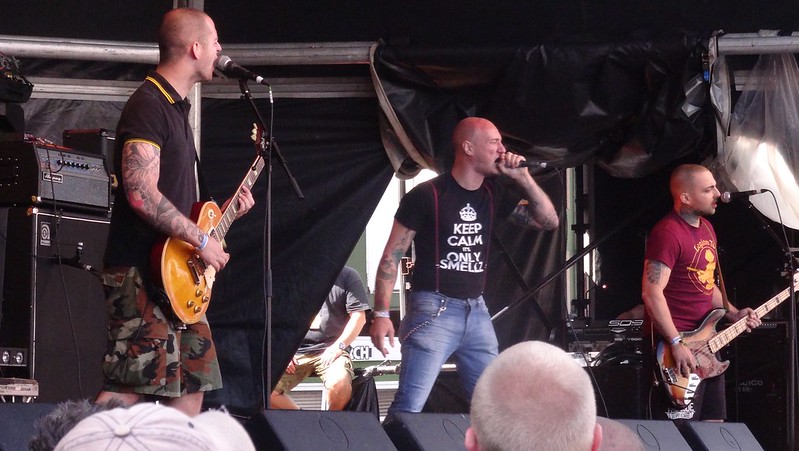
Many modern day skinheads prefer the more closely shaved style. Photo by Stephen Gidley, distributed under CC BY 2.0 license
The electric clipper is the tool of choice. Wahl is the standard brand, and a set with clip-on guards lets you run a one, two, three, or four at home without effort. As George Marshall noted in his 1994 book Spirit of ‘69: A Skinhead Bible, a well-oiled Wahl will last a lifetime.
Sideburns
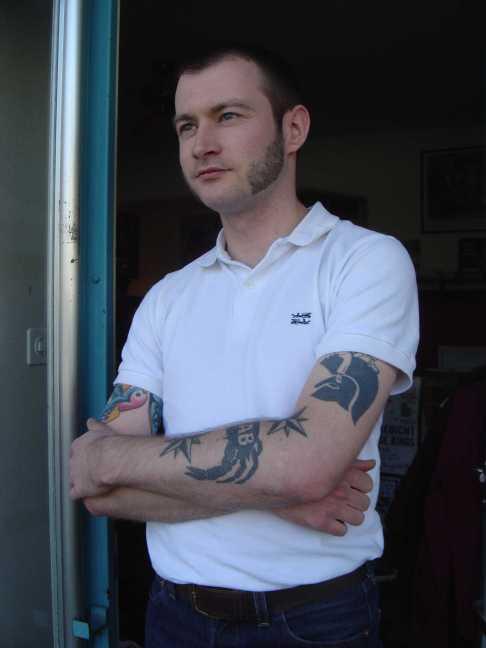
Photo by erick hrz aguirre, distributed under CC BY 2.0 license
Sideburns are a traditional detail, particularly among skins who lean toward the original late-1960s look. They sit in deliberate contrast to the cropped top, a small nod to the mod roots of the subculture. Beards and moustaches are not part of the classic look, though plenty of contemporary skins have moved past that constraint.
Skingirl hair
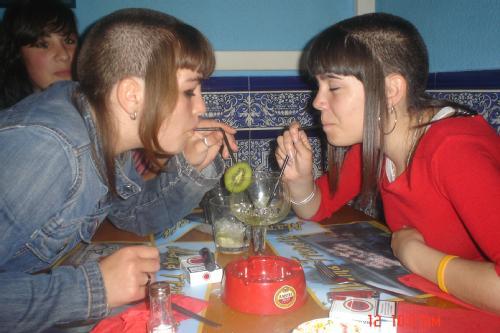
Two skingirls with chelsea cuts. Photo by erick hrz aguirre, distributed under CC BY 2.0 license
Skingirls wear the chelsea cut, also called the feathercut: a fringe at the front, cropped or shaved sides and back. The original version was subtler than the severe crop-and-fringe you sometimes see now. The top was cropped but not shaved, left longer, and the fringe was often bleached a different colour to the rest. George Marshall’s description from Spirit of ‘69 is worth quoting directly: “Originally the top was cropped, but not shaved, and so longer. Often the fringes are bleached a different colour to the top too.”
The chelsea is as specific a signal as the male crop. It is tied to the same working-class visual economy, practical and deliberate, and it shows up consistently in the skinhead fashion of both the original and revival eras.