Teddy Girls – The Overlooked Half of the Teds
Most accounts of the Ted era treat the girls as an afterthought, a footnote to the Teddy Boys who took up all the column inches. That is not an accident of history so much as a failure of attention. The Teddy Girls were a subculture in their own right, with their own take on the Edwardian revival and their own reasons for dressing the way they did.
Who They Were
The girls came from the same postwar working-class streets as the boys. East London was the heartland: Bethnal Green, Canning Town, Plaistow. Most left school at 14 or 15 and went straight into factory or office work. There was no money for much, and austerity Britain was not exactly designed with teenage self-expression in mind. What there was, though, was a growing second-hand and market-stall economy, and the ability to adapt, cut, and restyle clothes into something entirely your own.
They were known informally as Judies, the female counterpart to the Teds. The press barely registered them.
The Look
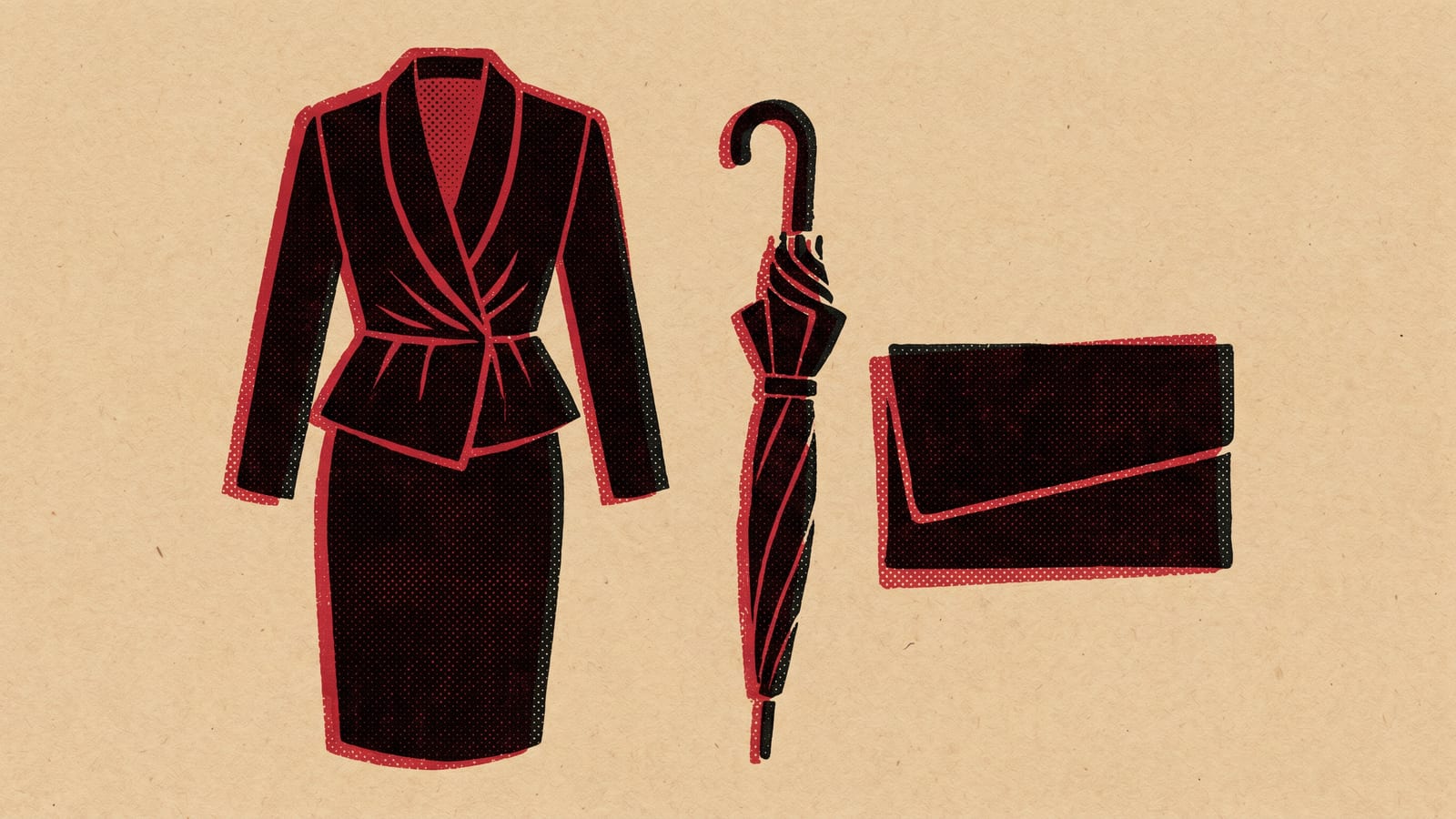
The Teddy Girl silhouette was not simply a feminised version of the drape jacket and brothel creepers her male equivalent was wearing. It was its own thing. Pencil skirts and hobble skirts, tailored jackets with velvet collars, straw boater hats, cameo brooches, espadrilles. Hair worn in long plaits or swept up. The whole effect was sharp and intentional, Edwardian references filtered through the wardrobe of a girl who had made it herself or found it for almost nothing.
Later in the decade, American influences came in: toreador trousers, circle skirts, ponytails. The look evolved, but the underlying logic stayed the same. This was not fashion in the sense of following trends. It was a statement about who you were and what you refused to accept.
Austerity as the Backdrop
The postwar settlement meant rationing had only ended in 1954, the year the Ted scene was fully visible on the streets. For young working-class women, conspicuous style was itself a kind of defiance. Dress codes and social expectations said you should be practical, modest, grateful. The Teddy Girls dressed as if they had somewhere better to be.
This is the part that tends to get flattened in retrospect. Accounts that frame the Ted subculture purely as a rock and roll enthusiasm miss the material reality: these were young people asserting individuality under conditions that did not encourage it, and the girls were doing that as deliberately as the boys, without getting credit for it.
Documented and Then Forgotten
The closest thing the Teddy Girls got to mainstream recognition was a 1955 commission by a young photographer named Ken Russell, then in his mid-twenties and working for Picture Post. His photographs, published in June 1955, are still striking: girls posed against bomb sites and graffitied walls in East London, dressed with a precision that makes the derelict backdrop feel like a deliberate contrast. Russell said himself that no one had paid much attention to the Teddy Girls before he photographed them.
The negatives were largely lost and not widely circulated until decades later. Which is, in a compressed way, the whole story: documented once, then forgotten.
Why the Erasure
The Teddy Boys became a moral panic. Youth violence, rock and roll, damage to cinema seats, all of it attached to the male half of the scene. The girls did not fit that narrative, so they were not reported on. The subculture press that came later, when scholars began taking postwar youth culture seriously, mostly followed the original press in treating the Teds as male by default.
It is a pattern that recurs. Girls participate in working-class youth subcultures on their own terms, and the record systematically underweights them because the cameras and the critics were pointed elsewhere.
What They Left
There is no direct line from the Teddy Girls to a later named female subculture the way you can trace a thread from the Teds through the rockers. What they left is harder to measure: proof that the Edwardian revival style had a female grammar of its own, and that working-class girls in postwar Britain were not passive consumers of a scene their boyfriends had invented.
Ken Russell’s photographs are the primary archive. They show young women who look, across seventy years, completely sure of themselves.