Rockabilly – The Style That Never Died
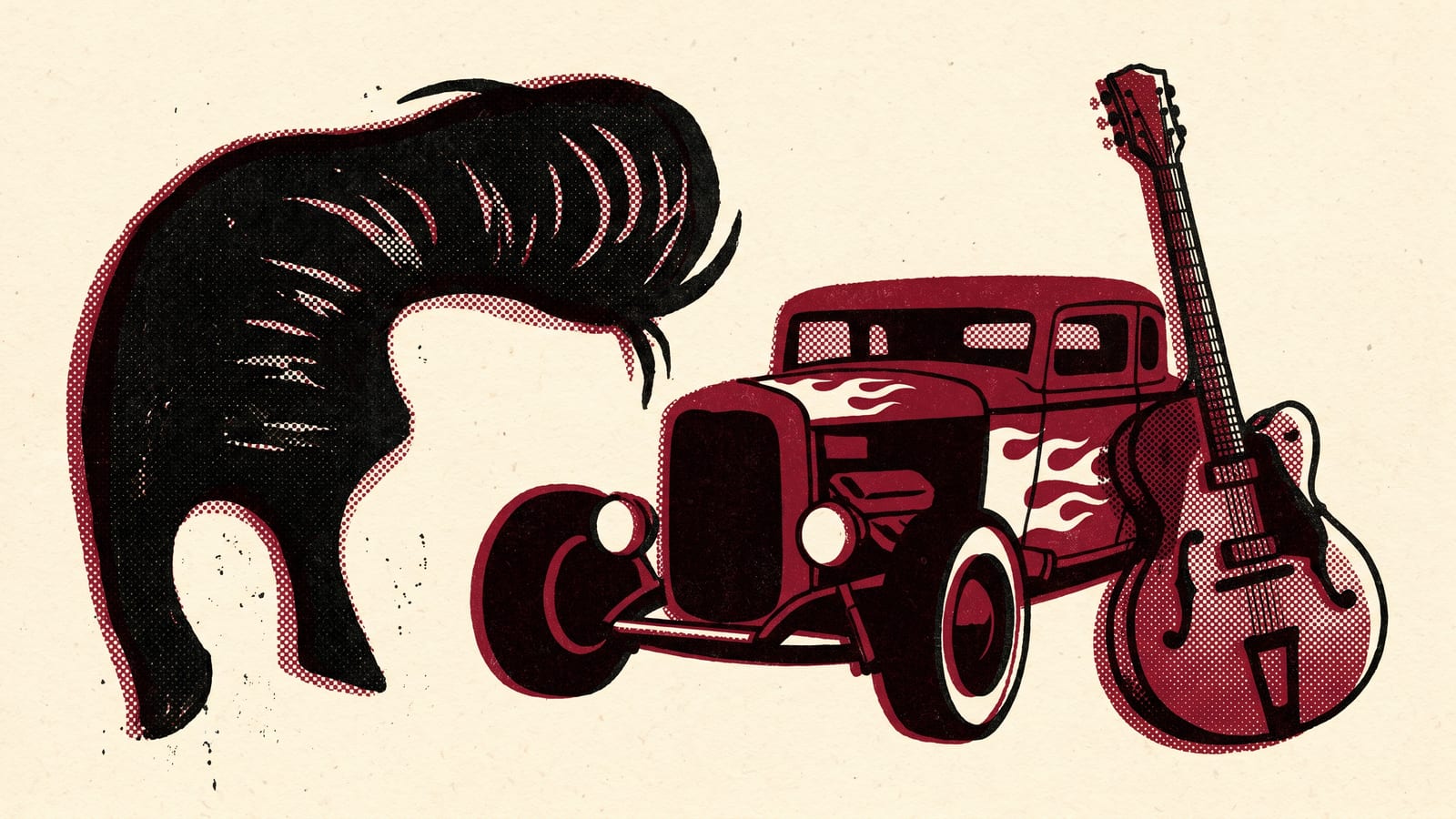
Rockabilly is one of those rare subcultures that has been declared dead several times and simply refused to cooperate. The original moment was brief, frantic, and genuinely strange. What followed it, across seven decades of revivals, splinter scenes, and international weekenders, says something interesting about why certain combinations of music, clothes, and attitude stick around long after their original context has vanished.
Where It Came From
The word itself is a portmanteau: rock (from rock and roll) plus hillbilly (American slang for country music). That roughly describes the sound. In the early to mid 1950s, young white Southern musicians were absorbing the rhythm and blues coming out of Black American music and fusing it with the country they had grown up with. The result was faster, rougher, and stranger than either parent genre.
Sun Records in Memphis, run by Sam Phillips, was the key label. Elvis Presley recorded there from 1954. Carl Perkins wrote and recorded “Blue Suede Shoes” for Sun in late 1955, released on 1 January 1956. It was the first Sun record to sell a million copies and crossed the country, pop, and R&B charts simultaneously, which almost nothing was doing at the time. Gene Vincent’s “Be-Bop-A-Lula” followed in 1956, Eddie Cochran brought a harder edge, and Wanda Jackson showed that the style was not exclusively male property, even if the mainstream kept trying to make it so.
The original boom was short. By the late 1950s, the music industry had smoothed most of the rough edges off rock and roll and pointed it toward a teenage pop market. Several of the key figures died young. Cochran died in a car crash in 1960. The raw, spontaneous thing Sun had briefly captured moved on.
The Look
The visual side of rockabilly was as deliberate as the music. The quiff, piled high with pomade and combed back at the sides, was the signature male style, partly inherited from the teddy boys who had already been building a similar aesthetic in Britain. Drainpipe jeans, white t-shirts, leather or Western shirts, and crepe-soled shoes were the basics. Women in the scene leaned toward 1950s Americana: full circle skirts, halterneck tops, victory rolls or pin-up curls. Tattoos were part of the picture early, long before they became mainstream fashion.
The look was coherent and legible in a way that marked you out. Walking through a town in 1957 in a quiff and drapes, you were making a statement even if you would not have described it that way.
The Revival
The first major revival came in the late 1970s and early 1980s, when a new generation decided the original thing was better than what had replaced it. The Stray Cats, formed in 1979 by Brian Setzer, Lee Rocker, and Slim Jim Phantom in New York, moved to London in 1980 and plugged into a British scene that was already rebuilding the style. Their UK hits, including “Rock This Town” and “Stray Cat Strut,” brought rockabilly back into the charts and onto television. Robert Gordon, working with guitarist Link Wray, had been making a similar argument in New York slightly earlier, though without the Stray Cats’ commercial reach.
The revival was not purely nostalgic. The proximity to punk mattered. Rockabilly and punk shared a rejection of slick production and a preference for speed and energy, which made the crossover feel natural. Out of that proximity came psychobilly, the subgenre that fused rockabilly’s instrumentation (upright bass, twangy guitar) with punk aggression and horror-film imagery. The Meteors, formed in London in 1980, are generally credited as the first band to self-identify with the psychobilly label.
A Living Subculture
What distinguishes rockabilly from pure nostalgia is that it is organised. Rockabilly weekenders, where people travel from across Europe and North America to spend a weekend in 1950s clothes listening to bands playing original and revival material, draw substantial crowds. The scene has its own customised car culture, its own specialist clothing and barber shops, its own tattoo aesthetic. People are not dressing up for a theme night. They live in the style.
The Stray Cats are still touring as of 2026. Venues that cater to the scene are dotted across the UK, the Netherlands, Scandinavia, and Germany. Japan has maintained a rockabilly scene continuously since the 1970s, with the Harajuku rockabillies becoming something of a cultural landmark in Tokyo.
The style persists because it is complete. The music, the clothes, the hair, the cars, the values (a certain roughness, a deliberate rejection of modernity) all reinforce each other. You can pick it up at any point and find the rest of it waiting.