Riot Grrrl – Feminist Punk
Riot grrrl is the name for a feminist underground that detonated out of Olympia, Washington and Washington DC in the early 1990s. It was not a genre exactly, though it had a sound. It was a political and cultural insurgency that grew inside the punk underground and argued, loudly, that the underground was doing the same things to women that the mainstream was.
Where it started
Bikini Kill formed in Olympia in October 1990. The lineup was Kathleen Hanna on vocals, Tobi Vail on drums, Kathi Wilcox on bass, and Billy Karren on guitar. Hanna was already doing zines and performance art before the band existed, and that blurring of disciplines never went away. The band’s music sat at the hardcore punk end of the spectrum, fast and abrasive, but the lyrical content was unlike anything else in that world: direct accounts of sexual violence, body autonomy, and the specific textures of female experience delivered from the stage without flinching.
The same year, Bratmobile were forming around Allison Wolfe and Molly Neuman, also tied to the Olympia scene. The two bands knew each other and moved in overlapping circles.
The zine as organizing tool
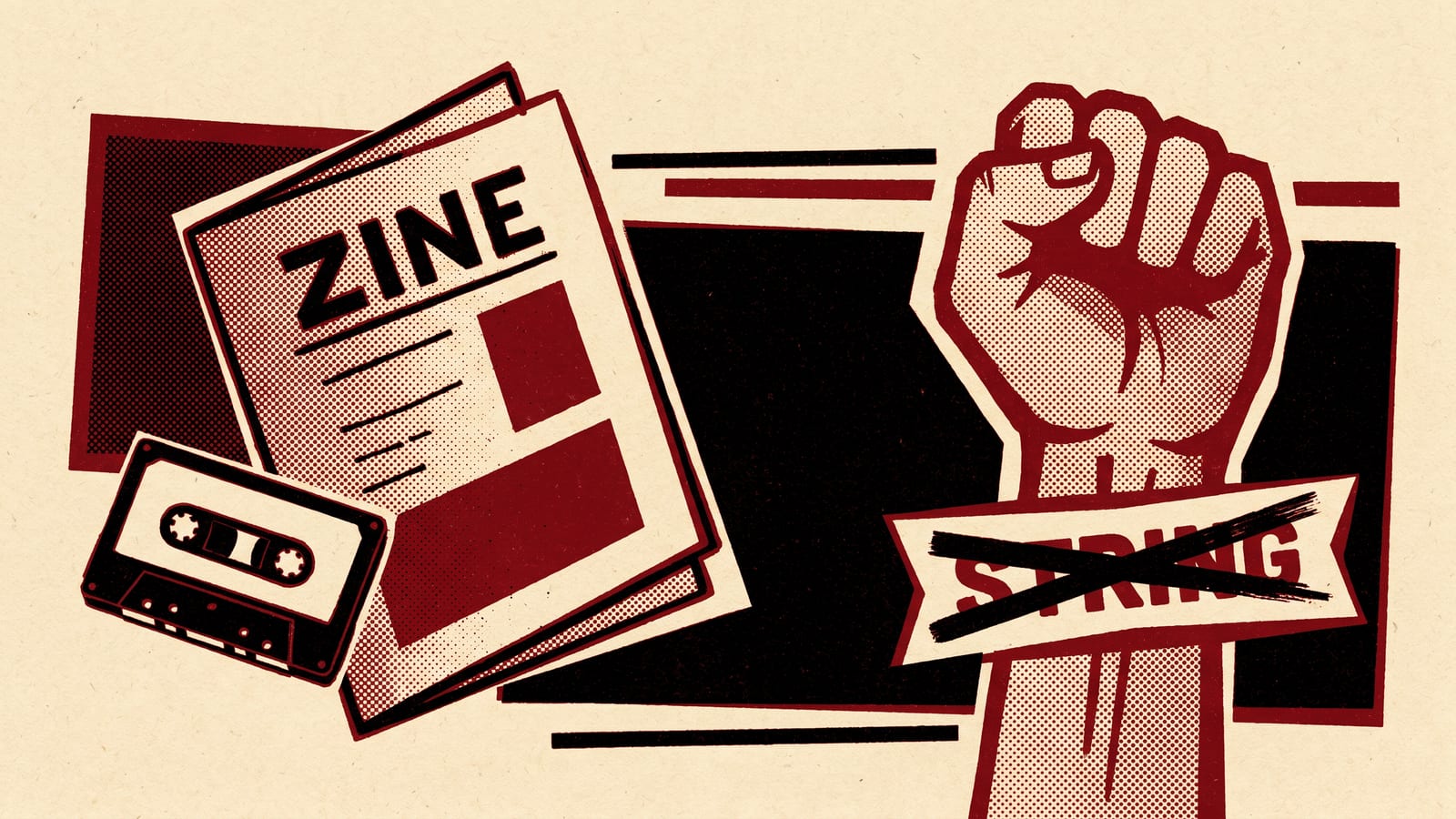
In July 1991, Hanna, Wolfe, Neuman, and Jen Smith collectively produced a photocopied zine simply titled riot grrrl while the Olympia bands were in Washington DC for the summer. That document is where the name crystallised, and the format was inseparable from the politics. Zines were cheap, unmediated, and bypassed every gatekeeping structure the music industry and mainstream press used to filter out voices they did not want to amplify. Writing in them, trading them, building networks through them, was itself a form of organizing.
Kill Rock Stars, founded in Olympia by Slim Moon in February 1991, became the label infrastructure behind the scene, releasing Bikini Kill, Bratmobile, and Heavens to Betsy among others.
The International Pop Underground and the moment of visibility
In August 1991, K Records threw the International Pop Underground Convention in Olympia, a five-day festival across more than fifty acts. The opening night was billed “Love Rock Revolution Girl Style Now” and it showcased the riot grrrl bands in concentrated form. This was the moment the thing that had been building in rehearsal spaces and photocopier rooms became visible as a movement rather than a tendency.
The following year, in 1992, a Riot Grrrl convention was held in Washington DC, a gathering that mixed bands, workshops, and direct conversation rather than just performance.
The sound and the stance
Musically, riot grrrl drew from the same well as hardcore punk: short songs, driven tempos, distorted guitars, and vocals that were not trying to sound pretty. What changed was who was at the centre of the room and what they were saying from it. Bikini Kill shows were famous for Hanna asking women and girls to come to the front, a practical inversion of the pit dynamics that routinely pushed women to the edges.
The politics were explicit and unapologetic. Riot grrrl was feminist in a way that did not ask permission from the punk underground. It named the underground’s own failures, the violence, the exclusion, the assumption that women in the room were girlfriends rather than participants, and treated those failures as political problems rather than personality clashes.
Legacy inside the underground
Riot grrrl did not have a clean ending. By the mid-1990s, mainstream press coverage had both amplified and distorted the movement, and a number of bands and participants pulled back from media engagement. Bikini Kill disbanded in 1997. But the infrastructure they built in those few years, the zine networks, the label relationships, the template for all-ages shows run on feminist principles, continued well past the peak of media interest.
Sleater-Kinney, formed in Olympia in 1994 from members with riot grrrl roots, carried the thread forward and eventually became one of the most critically discussed bands of the following decade. The riot grrrl model of self-publishing, self-promotion, and political clarity inside the music became a template that influenced far more of the punk underground than just the bands that called themselves riot grrrl.