Scooterboys – Life Around the Scooter
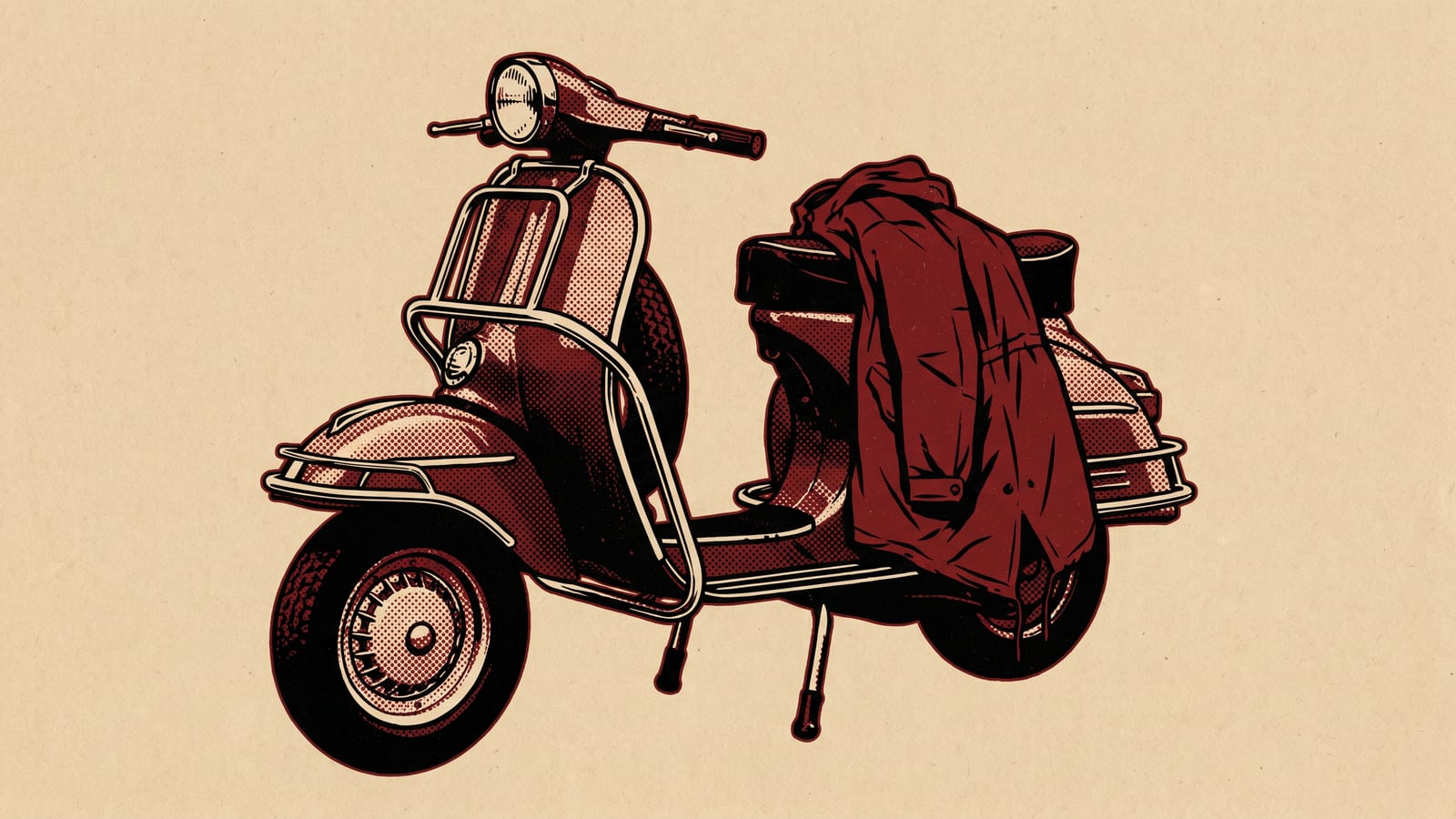
The scooterboy scene is the one that got left out of most histories of the period. The mod revival of the late 1970s gets its chapter, the skinheads get theirs, but the subculture that actually had tens of thousands of people riding across Britain to coastal rallies every bank holiday tends to get a line at best. That gap is worth filling.
Out of the mod revival
Scooterboys emerged directly from the mod revival, which had brought Vespas and Lambrettas back onto British streets from around 1979. At that point, the scene was still basically mod: the right haircut, the right parka, the face cards and the posturing. But for a lot of riders, the fashion side of it wore thin quickly.
What split off by the early 1980s was a subculture that had decided the scooter mattered more than the look. The mod was, in the end, about being seen correctly. The scooterboy just wanted to ride, to wrench, and to get to the next rally. The practical uniform reflected that: MA1 flight jacket plastered in rally patches, army fatigues, straight jeans, boots or trainers. Nobody was spending their dole money on tailoring.
Customisation as identity
Where mods dressed their scooters in chrome accessories and period-correct detailing, scooterboys went in a completely different direction. The dominant styles were the runner, stripped and tuned for speed, and the chopper or cutdown, where the bodywork was cut back and the frame modified into something closer to a custom motorcycle. Engines were bored out, exhausts changed, performance parts grafted on. The machines got airbrushed murals, photo-realistic scenes, band logos, anything personal.
The result was that two scooterboys might be riding the same Lambretta GP base model and end up with machines that looked nothing alike. That individuality was the point. It is almost the opposite of the casuals approach, where the status came from wearing exactly the right label exactly the right way. Here, the status came from what you had built.
The rally scene
The rally scene was the social infrastructure the whole thing ran on. Easter at Scarborough in 1979 drew an estimated 10,000 scooters, and that was still early. Through the 1980s the circuit expanded: Isle of Wight, Skegness, Morecambe, Great Yarmouth, Margate, venues up into Scotland. The Isle of Wight rally of 1984 is often cited as probably the biggest in British history. These were full-weekend events, hundreds of miles of riding to get there, cheap shared accommodation, and all-night music.
The music at the rallies was notably eclectic. Northern soul had a strong presence, carrying that long connection between scooter culture and the rare-groove all-nighter scene. Psychobilly, Oi, ska and reggae all featured. It was not a musically conservative crowd. The scooterboy scene drew from a lot of places simultaneously, which is part of why it is hard to pin down compared to more tightly defined subcultures.
The northern soul thread
The connection to northern soul is older than the scooterboy scene itself. Soul music and scooter culture had run together since the 1960s, when the same young working-class crowd that rode to the Twisted Wheel and the Wigan Casino also kept the Lambretta dealers busy. That thread carried straight into the 1980s rally scene. The travelling, the all-nighters, the sense of a community that existed apart from the mainstream, it all mapped across naturally. The scooterboy scene gave northern soul fans a vehicle in the most literal sense.
What they were not
It is worth being clear about who the scooterboys were not. They were not mods, even though they rode the same machines. They were not skinheads, although the crowd overlapped. They were not rockers, though the hostility between scooter and motorbike crowds occasionally produced genuine trouble at rally venues. The identity was genuinely its own thing, even if it never had the same cultural profile as those other scenes. Part of the reason is probably that it was never really about music or fashion in the way that generates press coverage. It was about the act of riding and the community that formed around it.
By the late 1980s and into the 1990s the scene was still running, if more dispersed. The rallies continued. Clubs stayed active. The subculture never really collapsed so much as it settled into a lower-profile permanence, the kind of thing that sustains itself without needing cultural validation.