Rave Culture – The Second Summer of Love
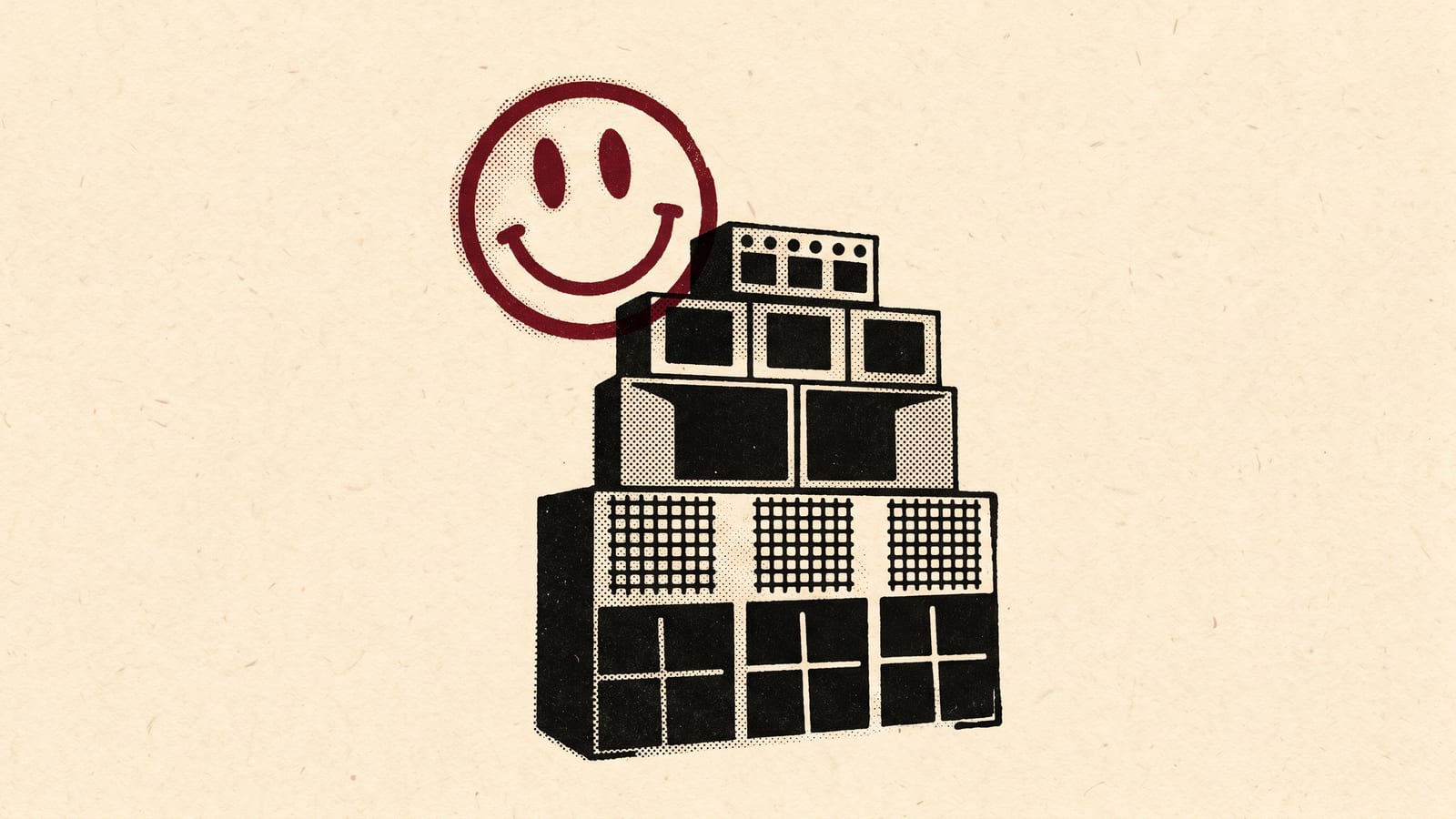
The Second Summer of Love did not arrive gently. In 1988, something cracked open in British youth culture: acid house from Chicago, MDMA flooding in from Europe, a network of empty warehouses, and a generation that had grown up under Thatcher deciding it wanted to dance. The result was one of the genuine youthquakes of the twentieth century.
The Ibiza pipeline
The conventional origin story starts in the summer of 1987, when a group of DJs including Danny Rampling, Paul Oakenfold, and Nicky Holloway holidayed in Ibiza together. The open-air clubs there, particularly Amnesia under DJ Alfredo, were already mixing house, balearic, and the emerging acid sound. The DJs came back converted.
By early 1988, Rampling had opened Shoom in a Southwark fitness centre, Oakenfold was running Future and then Spectrum at Heaven, and Holloway had launched The Trip at the Astoria. These were small, sweaty, word-of-mouth affairs with strict door policies, and the crowd was tight-knit. The yellow smiley face became the motif. Ecstasy was everywhere, not yet feared by the press, barely on the radar of the authorities.
From clubs to fields
The clubs could hold a few hundred. What happened next required rather more space.
By the summer of 1988, promoters were booking warehouses, then airfields, then open fields. Tony Colston-Hayter’s Sunrise parties became the template: a phone number circulated on flyers, ravers would ring on the night for a meeting point, then follow a convoy outward from London. The M25 orbital motorway became a kind of ritual route, with tens of thousands of cars trailing police helicopters into the home counties. Biology, Energy, and Genesis were drawing crowds of twenty thousand or more. To anyone who was there, those event names still carry the weight of mythology.
DJ Nicky Holloway put it plainly: “There’s no way acid house would have taken off the way it did without ecstasy.” The drug and the music were engineered for each other. MDMA suppressed aggression, collapsed social barriers of class and race and sexuality, and made a Roland TB-303 bassline feel like a revelation. The free party ethos grew directly from this moment, the conviction that the experience could not be owned or controlled.
The moral panic
The press took a while to catch up, and then overcompensated badly. On 12 October 1988, The Sun was cheerfully promoting acid house as “cool and groovy” and offering its readers smiley face t-shirts. Within weeks the same paper had reversed entirely, running horror stories about drug-fuelled raves and the corruption of British youth. By 24 June 1989 the headline was “Spaced Out!” above coverage of a Sunrise party.
The machine was in motion. MPs began calling for legislation. Pirate stations like Kiss FM, Centreforce, and Sunrise Radio, which had been the primary way ravers got event information, were raided. Police used roadblocks and helicopters to intercept convoys. The cat-and-mouse dynamic became part of the ritual: a successfully reached rave felt like a victory.
The legislation arrives
The government’s response came in stages. In December 1989, Conservative MP Graham Bright introduced the Entertainments (Increased Penalties) Bill, raising fines for unlicensed events from £2,000 to £20,000 with potential imprisonment. It was a warning shot. The fuller clampdown, the Criminal Justice and Public Order Act, came in 1994, with its notorious definition of music “characterised by the emission of a succession of repetitive beats” as something the police could shut down by force.
By then the scene had already transformed. The outdoor illegals fed licensed superclubs, regional scenes branched everywhere, and the music splintered into jungle, techno, hardcore, and eventually garage. But the 1988 to 1989 window remains distinct, a moment before the institutionalisation, when nobody was quite sure what they were building.
What it actually was
Rave culture in its original form was genuinely utopian, and not in a vague way. It dissolved the usual British social sorting: class backgrounds, football loyalties, racial divides, the standard Saturday night aggression all seemed to evaporate on the floor. Whether that was the music, the drug, or the shared illegality of the whole enterprise is hard to separate. The answer is probably all three.
The Second Summer of Love is usually framed as a drugs story by the press and a music story by the participants. It was both, and it was also a political event, an entire generation refusing, briefly, to be categorised and managed. The legislation that followed it was not accidental.
For the underground strain that refused to go legal entirely, see free parties and the traveller convoy culture that kept the flame through the 1990s.